
Otto Lehmann · 24 September 2026
Community Dynamics in Niche Digital Ecosystems: Lessons from Adaptive Platform Growth Strategies
Community dynamics in niche digital ecosystems revolve around interactions among specialized user groups that form around shared interests such as open source coding projects, independent game modding forums, and hobbyist data analysis networks, where participants exchange knowledge and resources through structured channels that evolve over time, and adaptive platform growth strategies involve adjustments to algorithms, moderation tools, and feature rollouts that respond directly to shifts in user behavior and engagement metrics.
Core Elements of Community Dynamics
Researchers track participation patterns through metrics including post frequency, reply chains, and retention rates, which reveal how subgroups within a niche ecosystem establish hierarchies based on contribution quality and consistency, while newcomers integrate through guided onboarding processes that platforms implement to reduce early drop off. Data from multiple studies indicate that successful niches maintain balance between core members who set norms and peripheral users who bring fresh perspectives, creating feedback loops that sustain activity without overwhelming moderation systems.
Turnout in these ecosystems often correlates with platform decisions on visibility features, such as recommendation engines that surface content from smaller subgroups to broader audiences, and when platforms tweak these engines based on engagement data the overall interaction volume tends to increase across the board. Observers note that September 2026 brings scheduled updates from several major hosting services aimed at refining subgroup discovery tools, which could further influence how niche clusters expand or contract depending on the precision of those changes.
Adaptive Strategies in Platform Development
Platforms that demonstrate sustained growth in niche segments apply iterative changes to their infrastructure, including A/B testing of notification systems and moderation interfaces that prioritize context specific rules over blanket policies, and these adjustments allow communities to self regulate more effectively while platforms collect granular data on which interventions produce measurable lifts in session duration. Industry reports highlight cases where modular design elements, such as customizable thread formats and role based access controls, enable ecosystems to scale without losing the specialized character that attracts dedicated users in the first place.
One documented approach involves integrating analytics dashboards that community administrators can access to monitor subgroup health indicators, and platforms that release such tools in phased rollouts report higher adoption rates among niche operators who then refine their own growth tactics accordingly. Evidence from academic analyses shows that when platforms link these tools to external data sources the resulting insights help predict inflection points where a niche might either fragment or consolidate around new themes.
Observed Patterns Across Ecosystems
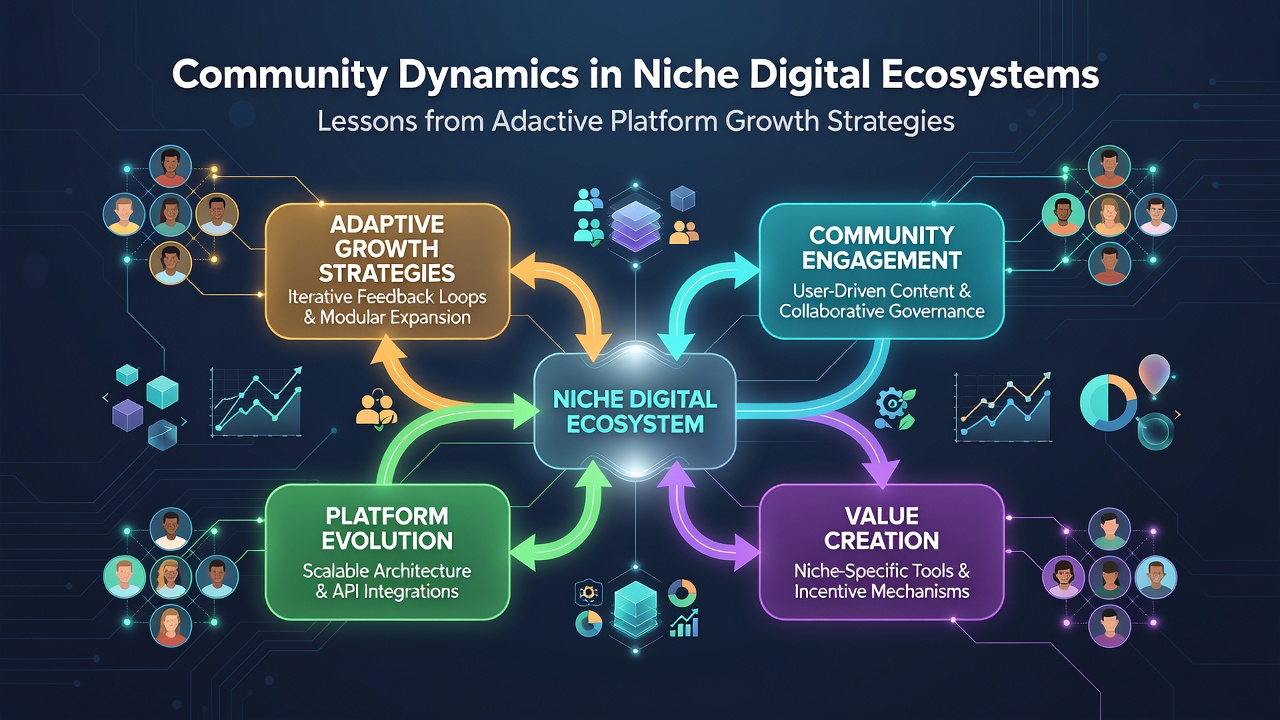
Patterns emerge when comparing ecosystems that center on technical collaboration versus those focused on creative sharing, as technical groups tend to prioritize version control integrations and threaded code review features while creative groups emphasize asset sharing libraries and real time feedback loops, yet both benefit from platform level support for reputation systems that reward sustained involvement. Figures from research institutions reveal that ecosystems incorporating cross platform bridging tools experience accelerated knowledge transfer between related niches, leading to hybrid communities that draw participants from multiple original sources.
Regulatory frameworks in various regions shape these dynamics as well, with the European Commission's digital services documentation outlining transparency requirements for recommendation algorithms that affect how niche content reaches users, and Canadian government analyses of digital marketplaces provide complementary data on how smaller ecosystems adapt when larger platforms alter their terms of service. Platforms that align their growth strategies with such guidelines often see smoother integration of new features because compliance reduces friction during updates.
Lessons Derived from Growth Data
Analysis of platform trajectories demonstrates that incremental adaptation outperforms wholesale redesigns in preserving community trust, since sudden changes to core functions like search or notification defaults can trigger temporary engagement drops before stabilization occurs, and longitudinal data sets confirm that phased implementations allow operators to measure impact at each stage and course correct accordingly. Those who study these ecosystems find that metrics tied to subgroup autonomy, such as the ability to set local rules within broader platform guidelines, correlate strongly with long term retention across diverse niche types.
What's interesting is how external partnerships influence outcomes, as collaborations between platforms and research organizations have produced shared benchmarks for evaluating community health that go beyond simple user counts to include measures of knowledge depth and cross member collaboration rates. These benchmarks then feed back into strategy refinement cycles that platforms repeat at regular intervals.
Conclusion
Community dynamics in niche digital ecosystems continue to evolve through the interplay of user driven norms and platform implemented adaptations, with lessons from growth strategies pointing toward the value of responsive tools, transparent data practices, and region specific regulatory awareness that together support sustained participation. Platforms that apply these insights maintain relevance as user interests shift, while the ecosystems themselves expand in ways that reflect both internal cohesion and external connectivity.